
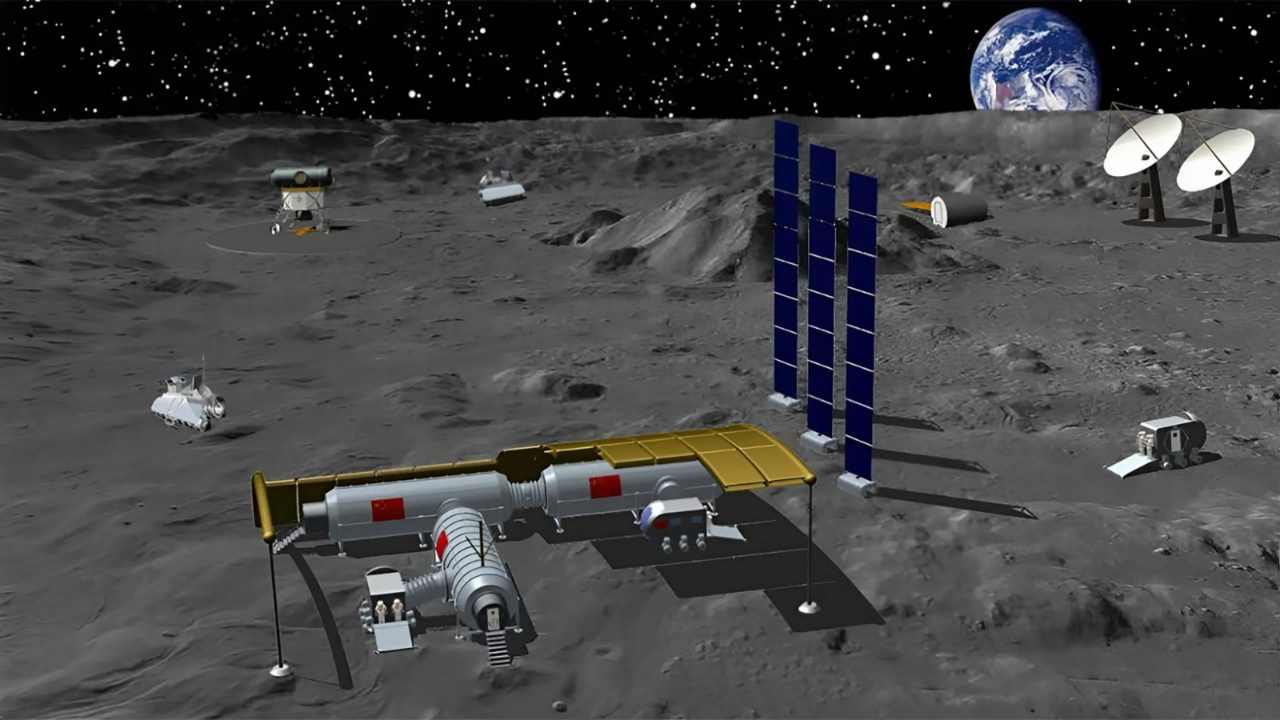
Project is part of the Chang’e 8 mission and aims to ensure energy for the lunar base in partnership with Russia
China confirmed on Wednesday (23) its plans to install a nuclear power plant on the Moon’s surface as part of its ambitious mission to establish a lasting human presence on Earth’s natural satellite. The proposal, initially revealed in March 2024, was detailed during the presentation of the Chang’e 8 lunar mission, scheduled for launch in 2028.
The goal is to provide stable energy to the International Lunar Research Station (ILRS), a joint initiative with Russia aimed at creating a self-sufficient scientific base at the lunar south pole. According to the mission’s chief engineer, Pei Zhaoyu, energy generation will be tested using different technologies, including large-scale solar panels and a nuclear reactor.
The energy infrastructure installation includes networks of cables and heat pipes, which will be positioned on the lunar surface to keep equipment and future astronauts operating safely during long missions.
The proposal for the nuclear reactor, which had not yet been officially announced until then, was presented to representatives of the international consortium involved in the ILRS — which already includes 17 countries and organizations. The plan is for the reactor to be operational by 2035, ensuring long-term energy for the station.
Meanwhile, the United States is advancing with the Artemis program, which aims to send astronauts back to the Moon in 2027. The race for a permanent base on the satellite is becoming increasingly intense.
According to Wu Weiren, the head of China’s lunar program, the first module of the ILRS is expected to be built in less than a decade and will serve as the starting point for future expansions.
Looking ahead, China plans to launch the “Project 555,” aiming to mobilize 50 countries, 500 institutions, and 5,000 scientists around the lunar station, turning it into a global research center.
Source and images: Olhar Digital / CAST. This content was created with the help of AI and reviewed by the editorial team.
